

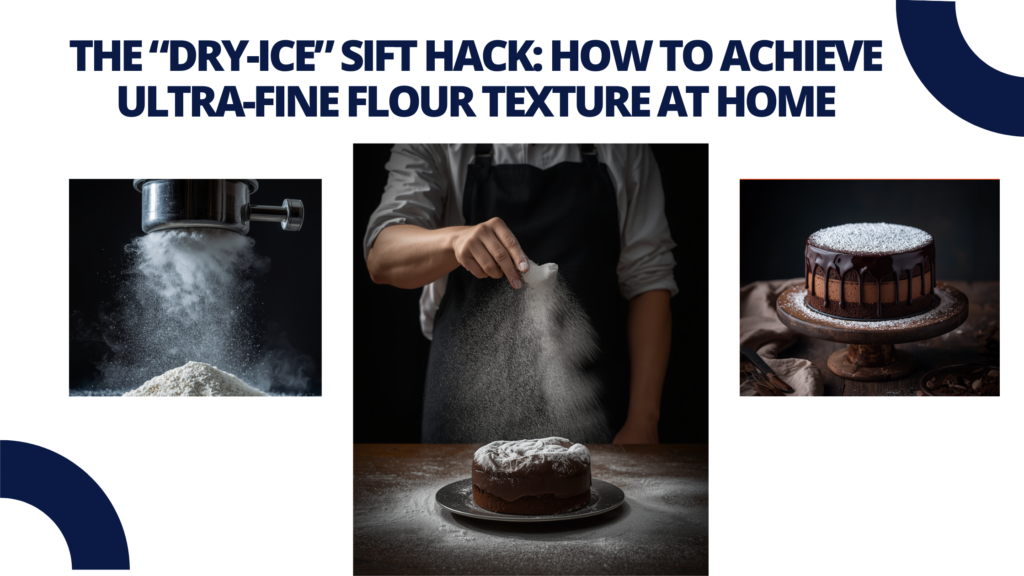
The “Dry-Ice” Sift Hack: How to Achieve Ultra-Fine Flour Texture at Home
What Is the Ultra-Fine Flour Texture Hack?
The “Dry-Ice” Sift Hack: How to Achieve Ultra-Fine Flour Texture at Home has become a popular baking trick for achieving softer cakes and smoother batters without using any special equipment.
The “Dry-Ice Sift” technique is a trending baking hack that helps create ultra-fine flour texture at home using simple kitchen tools.
This easy method can instantly improve:
- Cake softness
- Batter smoothness
- Overall texture of baked goods
Why Ultra-Fine Flour Texture Improves Baking?
1. Creates Lighter Cakes
Fine flour blends smoothly into batter, giving a soft crumb.
2. Prevents Lumps
No more uneven mixing or dense spots in cakes.
3. Improves Air Incorporation
More air = fluffier baked goods.
4. Gives Bakery-Style Results
That smooth, melt-in-the-mouth texture becomes achievable.
How to Create Ultra-Fine Flour Texture at Home?
Step 1: Choose the Right Flour
Use all-purpose flour or cake flour for best results.
Step 2: Double or Triple Sift
Sift the flour 2–3 times using a fine mesh sieve.
Each round makes the flour lighter and smoother.
Step 3: Use a Blender (Optional Pro Trick)
Pulse the flour in a dry blender for a few seconds before sifting.
This helps break down larger particles. This extra step helps create ultra-fine flour texture that blends more smoothly into cake batters.
Step 4: Combine with Cornflour (Optional)
Replace 1–2 tbsp of flour with cornflour to mimic cake flour texture.
Pro Tips for Ultra-Fine Flour Texture
1. Always Sift Before Measuring
This ensures accurate quantity and better texture.
2. Use a Fine Mesh Sieve
Regular sieves won’t give the same result.
3. Don’t Skip Multiple Sifting
One sift is not enough for that “bakery feel”.
4. Keep Flour Dry
Moisture can ruin the texture.
When Should You Use This Technique?
Use the dry-ice sift method for:
- Sponge cakes
- Chiffon cakes
- Cupcakes
- Swiss rolls
- Any light-textured dessert
Avoid it for:
- Bread recipes (you need structure there)
Common Mistakes to Avoid?
- Using a coarse sieve
- Skipping multiple sifting
- Over-blending (can heat the flour)
- Storing sifted flour for too long
Why This Trick Works?
Commercial bakeries use finely milled flour that blends effortlessly into batters.
This method recreates that effect by:
- Breaking down flour particles
- Adding air
- Improving mixing consistency
The result?
Softer, smoother, more professional bakes.
Bakers often use ultra-fine flour texture techniques to achieve softer crumbs and more delicate desserts.
If you’re curious about reducing waste while baking, check out our blog on “Invisible” Sustainability: The Zero-Waste Flour Hack.
Happy baking.
FAQs About Ultra-Fine Flour Texture
1. Is this the same as cake flour?
Not exactly, but it closely mimics the texture.
2. Can beginners use this method?
Yes, it’s simple and requires no special tools.
3. Does it really make a difference?
Yes — especially in cakes and delicate desserts.
Disclaimer: This blog is intended for educational and informational purposes only. Results may vary depending on ingredients, equipment, and technique. Always follow safe baking practices and use caution when handling hot ovens, sharp tools, and food.