

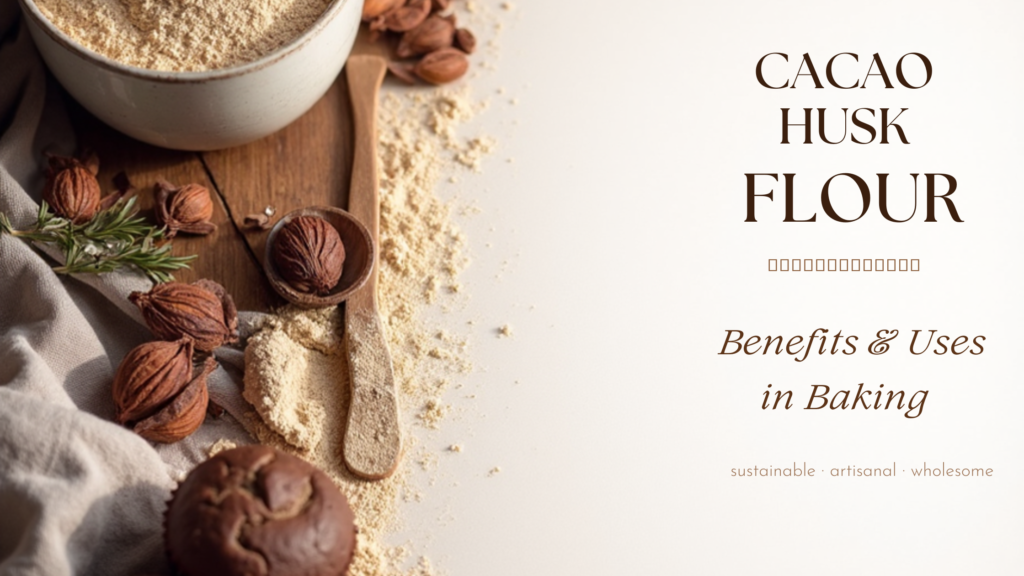
Cacao Husk Flour Benefits & Uses in Baking
Baking is slowly becoming more mindful. Today, it’s not only about making desserts taste good — people also care about sustainability, nutrition, and reducing kitchen waste.
That’s why ingredients like cacao husk flour are becoming popular in modern baking.
Made from the outer shell of cacao beans, this flour was once treated as waste during chocolate production. Now, bakers are turning it into something useful, flavorful, and surprisingly nutritious.
It adds a light cocoa-like flavor, extra fiber, and a more sustainable touch to recipes. If you enjoy experimenting with healthier or eco-friendly baking ingredients, cacao husk flour is definitely worth trying.
What Is Cacao Husk Flour?
Cacao husk flour is made using the thin outer shell of cacao beans. During chocolate processing, these shells are usually removed and discarded.
Instead of letting them go to waste, the husks are cleaned, dried, and finely ground into flour.
The result is a nutrient-rich ingredient that can be added to baked goods for both flavor and texture. It’s also becoming popular among bakers looking for more sustainable alternatives in the kitchen.
Why Bakers Are Using Cacao Husk Flour?
One of the biggest reasons people love cacao husk flour is its nutritional value.
It’s naturally high in dietary fiber, which helps improve texture in baked goods while also supporting digestion. It also contains antioxidants found in cacao, making it a more functional ingredient compared to regular refined flour.
Another reason it’s trending is its mild chocolate flavor. It gives recipes a subtle cocoa taste without making them overly rich or sweet.
Most importantly, it supports zero-waste baking — something many home bakers and bakeries are now focusing on.
How to Use Cacao Husk Flour in Baking?
If you’re using cacao husk flour for the first time, start small.
Instead of replacing regular flour completely, use it for around 10–20% of the flour in your recipe. This helps maintain a soft texture while still adding flavor and fiber.
It works especially well in:
- Brownies
- Chocolate cakes
- Cookies
- Muffins
- Banana bread
- Energy bars
The flavor pairs beautifully with ingredients like chocolate, coffee, nuts, cinnamon, and banana.
Some bakers even add a small amount to smoothies or hot drinks for an extra fiber boost.
Tips for Baking with Cacao Husk Flour
Because cacao husk flour contains a lot of fiber, it absorbs more moisture than regular flour.
To keep your baked goods soft and balanced:
- Start with small quantities
- Combine it with moist ingredients like yogurt, banana, or butter
- Sift the flour before mixing
- Add slightly more liquid if the batter feels thick
These small adjustments make a big difference in texture.
Common Mistakes to Avoid
One common mistake is using cacao husk flour as a full replacement for all-purpose flour. This can make cakes or muffins dry and dense.
Another issue is forgetting to adjust moisture levels. Since the flour absorbs liquid quickly, recipes may need a little extra milk, water, or oil.
Skipping the sifting step can also create a rough texture in the batter.
And because high-fiber baked goods dry out faster, overbaking is something to watch carefully.
Why Zero-Waste Baking Matters?
Zero-waste baking is becoming more important in the food industry, especially as more people look for sustainable kitchen practices.
Using ingredients like cacao husk flour helps reduce food waste while also giving bakers new creative possibilities.
It’s a simple ingredient swap, but it supports:
- Better ingredient utilization
- Sustainable baking habits
- Eco-conscious food production
- More thoughtful baking practices
Is Cacao Husk Flour Worth Trying?
If you enjoy experimenting with unique baking ingredients, cacao husk flour can be a fun addition to your pantry.
It adds texture, nutrition, and a subtle chocolate flavor while supporting more sustainable baking methods.
Whether you’re making brownies, muffins, or healthier desserts, it’s an easy way to try something different without completely changing your recipes.
If you enjoy bakery-style chocolate recipes, you can also try our Eggless Chocolate Basque Cheesecake for another deeply rich and creamy dessert idea.
Happy baking.
FAQs
1. Does cacao husk flour taste like chocolate?
It has a mild cocoa-like flavor, but it’s lighter and less intense than cocoa powder.
2. Is cacao husk flour gluten-free?
Yes, cacao husk flour is naturally gluten-free. However, always check packaging labels for possible cross-contamination.
3. Can beginners bake with cacao husk flour?
Absolutely. Start by replacing a small portion of regular flour and adjust slowly based on texture and taste.
4. What recipes work best with cacao husk flour?
Brownies, muffins, cookies, banana bread, and chocolate cakes work especially well because the flavor blends naturally with rich ingredients.
Disclaimer: This blog is intended for educational and informational purposes only. Results may vary depending on ingredients, equipment, and technique. Always follow safe baking practices and use caution when handling hot ovens, sharp tools, and food.