

Science of Baking: Salt‑Cured Eggless Yolk Umami Garnish
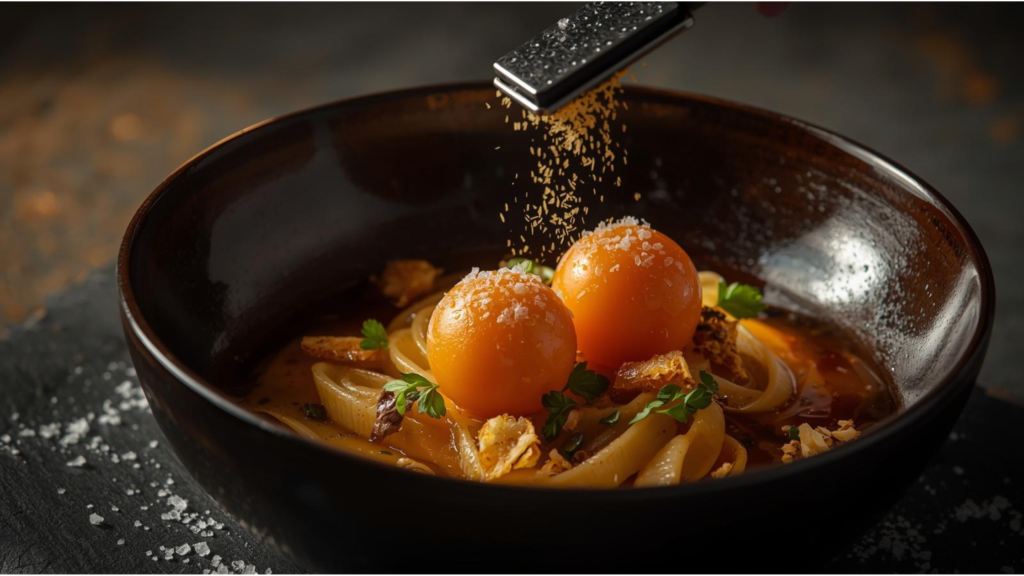
What if you could grate something over pasta, toast, or even chocolate mousse that looked like a cured egg yolk—but wasn’t an egg at all?
That’s the fascinating idea behind the salt-cured eggless “yolk.” This clever technique borrows from traditional food preservation and applies it to plant-based ingredients, creating a firm, sliceable, grate-able garnish packed with rich umami flavor.
The result is surprisingly elegant. A small golden sphere that slowly transforms into salt, developing a deeper flavor and a texture that can be shaved delicately over food. And the best part?
This isn’t just about replacing eggs for the sake of a trend. It’s about understanding how salt transforms texture and concentrates flavor—and using that science creatively in modern baking and cooking.
What Is a Salt-Cured “Yolk”?
Traditionally, egg yolks are buried in salt (sometimes mixed with sugar) and left to cure for several days. During this time, the salt slowly draws out moisture.
As the curing process continues:
- The yolk firms up
- Flavors intensify
- The texture becomes dense and sliceable
What begins as a soft, jammy yolk eventually becomes something closer to a savory golden cheese that can be grated over dishes.
An eggless version follows the same scientific principle — moisture removal and structure transformation — but uses plant-based ingredients instead.
Common bases include:
- Thick pumpkin purée
- Mango purée
- Carrot reduction
- A blend of plant-based cream and nutritional yeast
The goal is simple: create a soft sphere that slowly firms up as salt extracts moisture.
The Science Behind Salt Curing
Salt curing works through a process called osmosis.
When a moist ingredient is buried in salt, the environment outside the food has a higher salt concentration than the inside does. To balance this difference, water moves outward from the food into the salt.
As moisture leaves the ingredient:
- The texture becomes firmer
- Flavors become more concentrated
- The structure grows denser
In traditional egg yolks, proteins tighten and bind, creating a solid structure.
In plant-based versions, natural fibers, starches, and sugars concentrate, producing a similar sliceable consistency.
The transformation is slow, subtle, and incredibly satisfying to observe. It’s a quiet example of food science at work.
Ingredients
For the Plant-Based “Yolk” Base
½ cup thick pumpkin or mango purée (well-strained)
1 tablespoon cornstarch or tapioca starch
1 tablespoon nutritional yeast (for savory depth)
Pinch turmeric (optional, for color)
Pinch salt
For Curing
1 cup fine salt
½ cup sugar (optional, balances intensity)
Step 1: Create the Base
In a small saucepan, combine the purée, starch, nutritional yeast, and salt.
Cook gently over low heat, stirring constantly, until the mixture thickens into a smooth paste.
You’re looking for a texture that is
- Thick
- Glossy
- Able to hold its shape
Once thickened, allow the mixture to cool slightly.
Then scoop it into small silicone molds or wrap portions in cling film and gently shape them into spheres. Chill for at least one hour until the mixture is firm enough to handle.
Step 2: The Salt Cure
In a shallow container, mix the salt and sugar.
Create small wells in the mixture.
Place each plant-based “yolk” into a well and completely cover it with more salt.
Refrigerate for 24–48 hours.
During this curing time, the salt slowly draws out excess moisture. As a result, the spheres become noticeably firmer and more concentrated in flavor.
Step 3: Drying
After curing, gently brush away the excess salt.
If necessary, rinse very lightly and pat completely dry.
Place the cured spheres on a rack and refrigerate uncovered for another 24 hours to allow further drying. The final texture should be firm enough to grate, but not completely hard.
How It Tastes
The flavor is deep, savory, and slightly sweet depending on the base ingredient.
Pumpkin versions bring a warm, earthy richness.
Mango versions lean brighter and more aromatic.
Meanwhile, nutritional yeast adds a subtle cheese-like umami depth that enhances the overall flavor.
The goal isn’t to perfectly imitate egg yolk. Instead, it delivers the same intense, salty richness that cured yolks provide when shaved over food.
How to Use Salt-Cured Eggless “Yolk”
Once cured and dried, this vegan garnish behaves much like traditional cured yolks.
You can grate it finely over:
- Pasta dishes
- Avocado toast
- Roasted vegetables
- Creamy risotto
- Grain bowls
For an unexpected twist, try it over dark chocolate desserts, where its savory intensity creates a fascinating contrast.
Just a few delicate shavings can transform a simple dish into something memorable.
Why This Technique Matters
This recipe isn’t simply about replacing eggs in cooking.
It’s about understanding how traditional preservation techniques can inspire modern plant-based innovation.
Salt curing is one of the oldest culinary methods in the world. Applying it to plant-based ingredients opens the door to entirely new textures and flavors.
With this approach:
- Texture can be engineered naturally
- Flavor can be intensified without additives
- Ingredients remain simple and recognizable
It’s food science, simplified and accessible.
Final Thoughts
The salt-cured eggless “yolk” may be small, but it carries a surprising presence.
Golden, vibrant, and intensely flavorful, it turns everyday dishes into something special with just a few delicate shavings.
More importantly, it reminds us that culinary creativity often comes from understanding technique rather than adding complexity.
Sometimes the most interesting results appear when we remove moisture, concentrate flavor, and allow science to quietly shape the food.
And that’s where true innovation in baking and cooking begins.
Also read: The Chemistry of Baking: Understanding the Science for Better Results
Disclaimer: This blog is intended for educational and informational purposes only. Results may vary depending on ingredients, equipment, and technique. Always follow safe baking practices and use caution when handling hot ovens, sharp tools, and food.